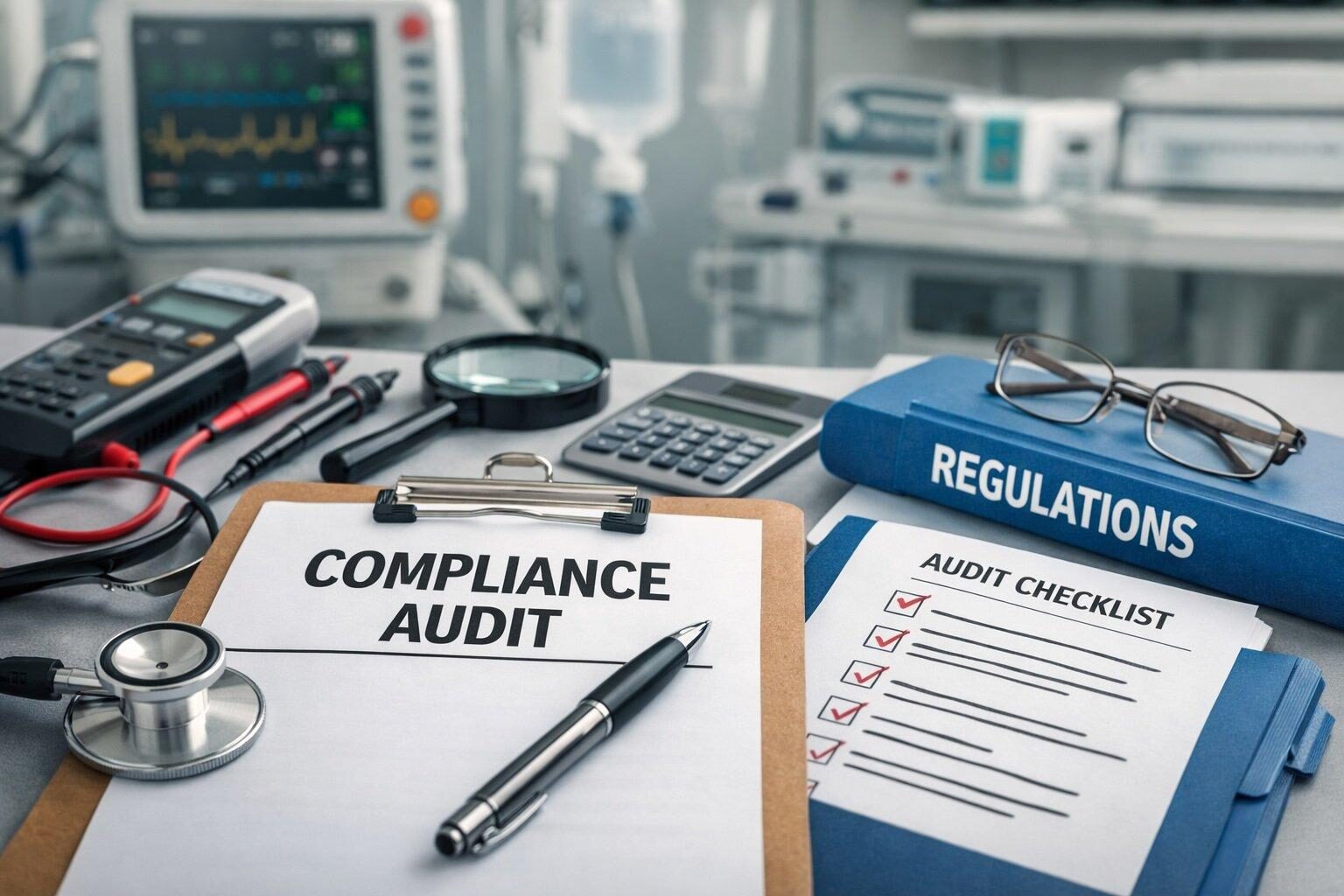
Medical equipment compliance audits are a critical part of maintaining safe and effective healthcare operations. Whether you operate a hospital, clinic, or imaging centre, ensuring your equipment meets regulatory standards is essential for patient safety and operational continuity.
However, many facilities only begin preparing when an audit is approaching, which often leads to stress, gaps in documentation, and last-minute fixes.
In this guide, we break down how to properly prepare for a medical equipment compliance audit and avoid common pitfalls.
What is a medical equipment compliance audit?
A compliance audit evaluates whether your medical equipment meets required safety, performance, and regulatory standards. This includes reviewing maintenance records, calibration data, risk assessments, and documentation.
The goal is to ensure that all equipment is safe for use, properly maintained, and compliant with relevant regulations.
Why compliance audits matter
- Ensure patient safety
- Reduce risk of equipment failure
- Avoid regulatory penalties
- Maintain accreditation and operational standards
1. Maintain accurate equipment inventory
The first step in audit preparation is having a complete and up-to-date inventory of all medical equipment. This should include:
- Equipment type and model
- Serial numbers
- Location within the facility
- Service and maintenance history
Without a clear inventory, it becomes difficult to track compliance and demonstrate proper maintenance during an audit.
2. Ensure regular maintenance and servicing
Auditors will review whether equipment has been serviced according to recommended schedules. Preventative maintenance is one of the strongest indicators of compliance.
Our biomedical equipment maintenance services help ensure that your devices are regularly inspected, serviced, and documented.
3. Keep calibration records up to date
Calibration ensures that equipment is performing accurately. During an audit, you may be required to provide proof that devices have been tested and calibrated according to standards.
Missing or outdated calibration records are one of the most common audit failures.
4. Organize documentation and reports
Proper documentation is essential. You should be able to quickly access:
- Maintenance logs
- Calibration certificates
- Service reports
- Risk assessments
Well-organized documentation demonstrates that your facility follows structured processes and takes compliance seriously.
5. Conduct internal checks before the audit
Performing internal reviews helps identify gaps before auditors do. This includes checking for:
- Missed maintenance schedules
- Incomplete documentation
- Equipment performance issues
Addressing these issues early reduces the risk of non-compliance findings.
6. Ensure staff are trained and informed
Staff should understand how to operate equipment safely and what procedures to follow. Auditors may ask questions to assess staff awareness and competency.
Training helps reduce user errors and ensures consistency across the facility.
7. Have a response plan for issues
Even well-maintained facilities can encounter issues. Having a clear response plan ensures that problems are addressed quickly and effectively.
Our technical support and troubleshooting services provide rapid assistance for urgent equipment issues.
How professional support improves audit readiness
Working with a specialized provider ensures that your equipment is maintained, documented, and compliant at all times.
Our compliance and regulatory services include calibration, performance testing, and documentation support to help you stay audit-ready.
Final thoughts
Preparing for a medical equipment compliance audit does not need to be stressful. With proper planning, regular maintenance, and organized documentation, you can approach audits with confidence.
A proactive approach to compliance not only reduces risk but also improves overall equipment performance and patient safety.
Need help preparing for an upcoming audit?
Contact MedElec to ensure your facility is fully compliant and audit-ready.